

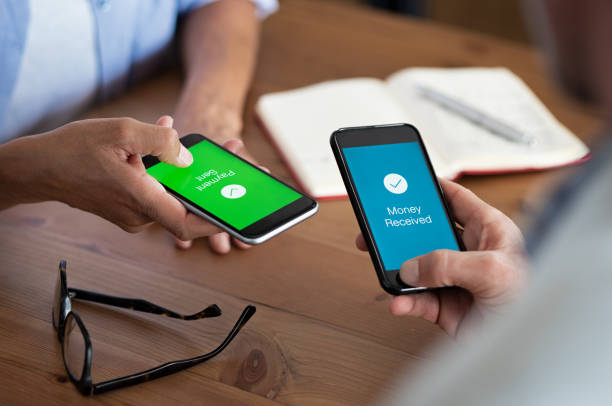
The narrative of Africa’s economic development has long been punctuated by challenges of financial inclusion. For decades, a vast portion of the continent’s population remained unbanked, sidelined by traditional financial institutions due to factors like geographic isolation, lack of formal identification, and the prohibitive costs of maintaining accounts. Yet, in a remarkable story of technological leapfrogging, Africa has become the undisputed global leader in a financial revolution: mobile money. This transformation did not emerge from the hallowed halls of Wall Street or the City of London, but from the innovative spirit of Nairobi and Dakar. It is a story of how a single service, M-Pesa, fundamentally rewired the economics of daily life for millions, and how a new wave of innovators, like Wave, are pushing the boundaries even further. This article explores the genesis, impact, and future of this revolution, examining what it means for Africans and the diaspora shaping the continent’s digital destiny.
Table of Contents
- The Genesis: M-Pesa and the Birth of a Revolution
- The Model Decoded: How Mobile Money Actually Works
- Beyond Kenya: Pan-African Adoption and Adaptation
- The New Wave: Disrupting the Disruptors
- The Regulatory Tightrope: Fostering Innovation While Ensuring Stability
- The Future Landscape: Interoperability, Cryptocurrency, and CBDCs
- Conclusion: Key Takeaways and the Road Ahead
The Genesis: M-Pesa and the Birth of a Revolution
The launch of M-Pesa (M for mobile, Pesa for money in Swahili) by Safaricom in Kenya in 2007 is the foundational chapter of this story. Initially conceived as a microfinance loan repayment tool, it quickly evolved into a general-purpose money transfer service. Its timing was impeccable. Kenya had high mobile penetration but low banking rates. The service was brilliantly simple: it allowed users to deposit, send, and withdraw money using a basic feature phone, bypassing the need for a bank account entirely.
The catalyst for its explosive growth was a very human need: the desire to send money home safely and cheaply. For urban workers, remitting funds to rural families was often a costly, risky, and time-consuming endeavor. M-Pesa solved this with unparalleled efficiency.
“M-Pesa wasn’t just a product; it was a solution to a deeply ingrained social challenge. It replaced the physical movement of cash with the digital movement of value, creating immediate trust and utility.” – Dr. Bitange Ndemo, Former Permanent Secretary of Kenya’s Ministry of Information and Communications.
Within years, M-Pesa became the de facto national payment system. It began to permeate every facet of the economy, used for paying for groceries, school fees, utility bills, and even salaries. By 2023, Safaricom reported over 30 million active M-Pesa customers in Kenya and processed transactions worth billions of dollars monthly, contributing significantly to Kenya’s GDP.
The Model Decoded: How Mobile Money Actually Works
At its core, mobile money is an electronic wallet service. Its operation relies on a network of agents who act as human ATMs, facilitating the conversion of physical cash to electronic value and back again.
- Registration: A user registers with a mobile network operator (MNO) at an agent kiosk, providing basic identification.
- Cash-In: The user gives physical cash to the agent. The agent, using their own phone, credits the user’s mobile wallet electronically. A small fee is usually charged.
- Transactions: The user can now:
- Send money to any other phone number (even on a different network, in some cases).
- Pay bills directly to registered companies.
- Buy airtime.
- Save money in the wallet.
- Cash-Out: The user can go to any agent, request a withdrawal, and receive physical cash in exchange for the electronic value in their wallet, minus a fee.
This agent-based model was the true innovation, creating a ubiquitous and accessible financial infrastructure where brick-and-mortar banks could not.
Beyond Kenya: Pan-African Adoption and Adaptation
The M-Pesa model was rapidly adopted across the continent, but its success was not uniform. Local market structures, regulatory environments, and competitive landscapes led to fascinating regional variations.
| Region/Country | Key Player(s) | Model | Unique Characteristic |
|---|---|---|---|
| East Africa (Kenya, Tanzania) | M-Pesa (Safaricom, Vodacom) | MNO-Led | Dominant market penetration, used for a vast array of services beyond P2P transfers. |
| West Africa (ECOWAS) | MTN Mobile Money, Airtel Money, Orange Money | MNO-Led | Strong competition between multiple large MNOs, leading to aggressive pricing. |
| Senegal | Wave | Non-MNO, Fintech | Disruptive model with a focus on ultra-low fees and a superior user experience. |
| Nigeria | Paga, Opay, MTN Momo | Fintech & MNO-Led | Large market with bank-led and fintech-led models competing fiercely with MNOs. |
| Southern Africa (SADC) | EcoCash (Zimbabwe), M-Pesa (SA, Lesotho) | MNO-Led | Mixed success; EcoCash crucial in hyperinflation context; slower adoption in more banked nations like South Africa. |
In Tanzania, Vodacom’s M-Pesa achieved similar success. In Zimbabwe, Econet’s EcoCash became a critical lifeline during periods of economic instability and cash shortages. In West Africa, giants like MTN, Airtel, and Orange rolled out their own services, though often facing more fragmented markets and stiffer competition from banks.
The New Wave: Disrupting the Disruptors
The very success of the MNO-led model created a new set of challenges: interoperability issues between different networks and sometimes high transaction fees. This opened the door for a new generation of fintech companies aiming to disrupt the disruptors.
The most prominent example is Wave, launched in Senegal in 2018. Wave took a different approach:
- Non-MNO Model: It operates independently of mobile networks, using a dedicated app.
- Radically Low Fees: Wave’s initial offer was free deposits and withdrawals, undercutting the established players.
- Superior UX: A focus on a sleek, intuitive smartphone app attracted a younger, tech-savvy demographic.
Wave’s impact was seismic. It acquired millions of users in months, forcing incumbents like Orange and Free to slash their fees significantly, a clear win for consumers. Wave demonstrated that the market was ripe for competition focused on customer-centric innovation.
The Regulatory Tightrope: Fostering Innovation While Ensuring Stability
The rapid growth of mobile money has placed central banks and regulators in a delicate position. Their primary mandate is to ensure financial stability, prevent money laundering, and protect consumers. However, overly restrictive regulations can stifle the very innovation driving financial inclusion.
The most successful regulatory frameworks, like Kenya’s, have been pro-innovation. They allowed non-banks (like MNOs) to operate payment systems, often under a special category with tailored rules. This test-and-learn
approach was crucial.
“Regulators must be enablers, not just gatekeepers. The goal is to create a sandbox where innovation can thrive within a clear framework that manages systemic risk and protects the consumer from harm.” – Dr. Ernest Addison, Governor of the Bank of Ghana.
Key regulatory challenges include:
- Interoperability: Mandating that different mobile money systems can talk to each other.
- Consumer Protection: Ensuring data privacy and establishing clear channels for dispute resolution.
- Anti-Money Laundering (AML): Implementing know-your-customer (KYC) rules that are robust but not exclusionary.
The Future Landscape: Interoperability, Cryptocurrency, and CBDCs
The mobile money ecosystem is far from static. Its future will be shaped by several converging trends:
- Full Interoperability: The ability to send money seamlessly from an M-Pesa wallet to an MTN wallet or directly to a bank account is the next frontier, creating a truly unified financial ecosystem.
- The Platform Model: Mobile money is becoming a platform upon which other services are built—micro-loans, insurance, savings products, and international remittances—creating a full-service digital finance hub.
- Cryptocurrency and Blockchain: While volatile, blockchain technology offers potential for reducing the cost and increasing the speed of cross-border transactions within Africa and for the diaspora.
- Central Bank Digital Currencies (CBDCs): Several African central banks, including Nigeria (eNaira) and Ghana, are exploring or have launched digital versions of their fiat currency. CBDCs could coexist with mobile money, potentially providing a more stable and government-backed digital asset for settlement.
Key Takeaways and the Road Ahead
The mobile money revolution is arguably Africa’s most significant contribution to the global fintech landscape. It is a powerful testament to homegrown innovation solving local problems.
Key Takeaways:
- Leapfrogging is Real: Africa bypassed traditional banking infrastructure and went straight to digital, creating a more inclusive and accessible system.
- Context is King: The M-Pesa model succeeded due to a perfect alignment of need, technology, and regulatory foresight. Its replication requires adapting to local contexts.
- Competition Benefits Consumers: The entry of players like Wave proves that continued innovation and competition are essential for driving down costs and improving services.
- Regulation is a Key Enabler: A proactive, flexible regulatory approach is non-negotiable for sustaining growth and stability.
The road ahead is filled with opportunity. The next chapter will be defined by the integration of these mobile wallets into the global digital economy, making it easier for the diaspora to invest back home and for African businesses to trade with the world. The question Who’s Next?
will be answered by those who can best leverage artificial intelligence for credit scoring, integrate blockchain for transparency, and build interoperable platforms that truly connect every African to the digital economy. The revolution is ongoing, and its next leaders will likely emerge from the very communities it continues to empower.



No Comments
Join the DiscussionBe the first to join the discussion!